Labels
How to Read the Lighting Facts Label on a Bulb Box
Every box of household bulbs carries a small black-and-white panel. It answers the questions that matter in the store, if you know how to read it.
Where the label came from
In 2011, the U.S. Federal Trade Commission began requiring manufacturers to include labels on light bulb packaging in order to help consumers select the best bulb for their lighting needs. The labels show “Lighting Facts,” modeled after the “Nutrition Facts” labels on food packages.
U.S. Department of Energy, Consumer Guide to Energy-Efficient Lighting
The Lighting Facts label gives shoppers the information they need to buy the most energy-efficient bulb to meet their lighting needs. The label includes a bulb’s brightness, energy cost, life, light appearance, and wattage.
Federal Trade Commission, The FTC “Lighting Facts” Label: Questions and Answers for Manufacturers
The five lines
- Brightness, in lumens. This is the light you get.
- Estimated yearly energy cost, in dollars.
- Life, in years.
- Light appearance, shown as a marker on a scale from warm to cool.
- Energy used, in watts.
Where the yearly cost comes from
The estimated annual energy cost of each lamp included in the package, expressed as “Estimated Energy Cost” in dollars and based on usage of 3 hours per day and 11 cents ($0.11) per kWh.
Code of Federal Regulations (FTC Energy Labeling Rule, 16 CFR Part 305), 16 CFR 305.23 -- Labeling for lighting products.
The label does not know your habits. It assumes 3 hours a day and 11 cents per kWh for every bulb, so that two boxes can be compared. For a TJOY A19 at 9 watts the sum is 9 × 3 × 365 ÷ 1,000 × $0.11, or $1.08 a year.
| Energy used | Yearly cost | TJOY lines |
|---|---|---|
| 0.6 watts | $0.07 | C7 night light |
| 4 watts | $0.48 | ST58 filament 40W, G9 40W, G9 40W dimmable, GU10 4W |
| 4.5 watts | $0.54 | B11 candelabra |
| 5 watts | $0.60 | A19 40W dimmable, G25 5W, Refrigerator A15, Rechargeable, Colored A19 |
| 5.5 watts | $0.66 | CA11 flame tip, G25 filament |
| 8 watts | $0.96 | A19 filament 60W, ST58 filament 60W, Dusk-to-dawn ST58 |
| 9 watts | $1.08 | A19 60W, A19 60W dimmable, BR30 65W, Dusk-to-dawn A19, Red A19 |
| 12 watts | $1.45 | A19 3-way |
| 15 watts | $1.81 | A19 100W |
- Take the wattsUse the energy used line, not the equivalent wattage on the front of the box.
- Multiply by your hoursA porch light on from dusk to dawn runs about 12 hours a day, four times the label figure.
- Apply your rateFind the price per kWh on your electric bill and use it in place of 11 cents.
Life in years
The life, as defined in this part, of each lamp included in the package, expressed in years rounded to the nearest tenth (based on 3 hours operation per day)
Code of Federal Regulations (FTC Energy Labeling Rule, 16 CFR Part 305), 16 CFR 305.23 -- Labeling for lighting products.
Most TJOY bulbs are rated for 15,000 hours. At 3 hours a day that is 15,000 ÷ 1,095, or 13.7 years. Run the same bulb 12 hours a day and expect about 3.4 years.
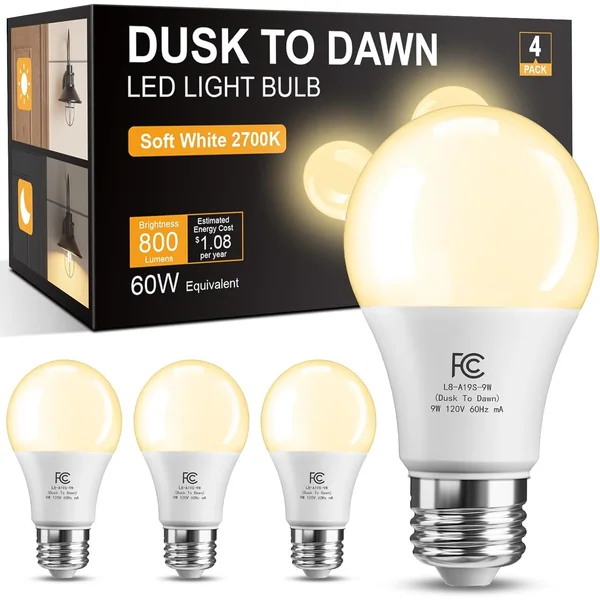
9 W, 800 lumens, light sensor
4 whites
$8.98from · $2.50 per bulb
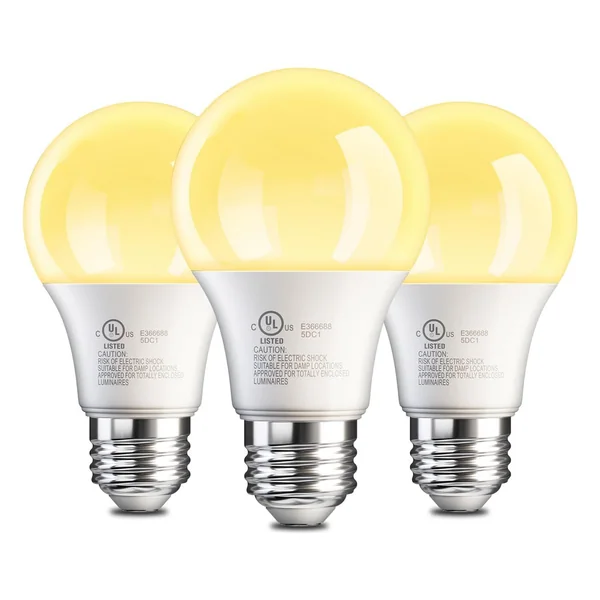
9 W, 800 lumens, not dimmable
4 whites
$7.99from · $0.83 per bulb
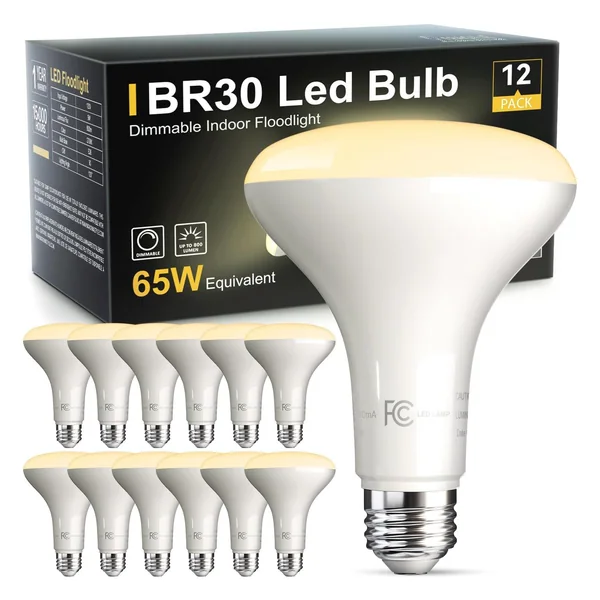
9 W, 800 lumens, 120° flood, dims
4 whites
$18.99from · $1.92 per bulb
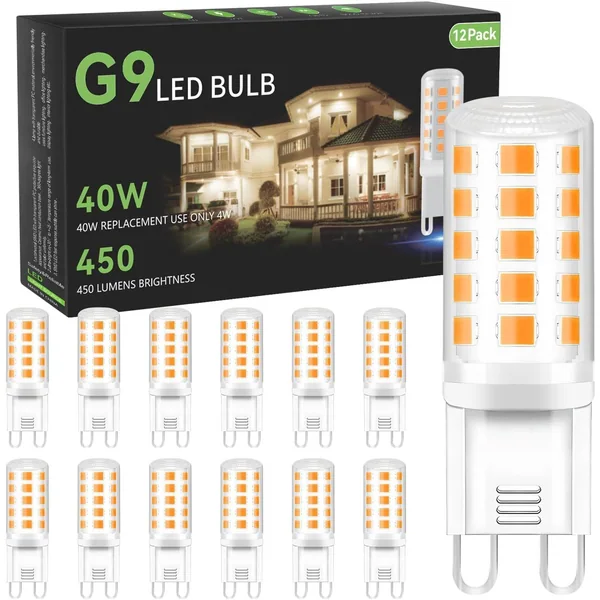
4 W, 450 lumens, G9 pins, not dimmable
4 whites
$9.99from · $1.50 per bulb
Light appearance
the correlated color temperature of each lamp included in the package, measured in degrees Kelvin, expressed as “Light Appearance” and by a number and a marker placed proportionately on a scale ranging from 2,600 K on the left to 6,600 K on the right
Federal Trade Commission, The FTC “Lighting Facts” Label: Questions and Answers for Manufacturers
A marker near the left end means a warm, yellow white. A marker near the right end means a cool, blue white. A 2700K bulb sits almost at the left edge.
Quick answers
What does estimated yearly energy cost mean on a light bulb?
It is the cost to run 1 bulb for a year at 3 hours a day and 11 cents per kWh. The FTC sets those two figures for every label.
How is bulb life in years calculated?
The rated hours are divided by 1,095, the hours in a year at 3 hours a day. A 15,000-hour bulb comes out at 13.7 years.